
Bow and Arrow: Birch Bark in Traditional Bow Making
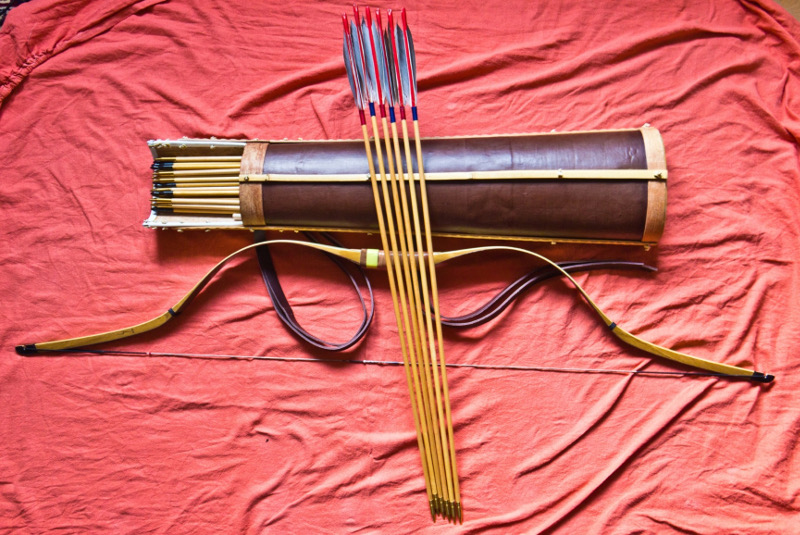 Anyone who engages with the old craft tradition of bow making will hardly get past the magazine »Traditional bow shooting«… over. And anyone who delves into this will often come across Manfred Byamba, who here consistently illuminates the old craft in a well-founded and well-researched manner. He inevitably keeps coming back to birch bark, because in the past, it wasn't just traditionally used for building quivers to transport arrows, as the sensational find from the Schnidejoch in Switzerland recently proved: For 5,000 years the birch bark lay here before the melting glacier brought the quiver to light.
Birch bark is also an indispensable material in historical bow making: high-quality composite bows were wrapped with birch bark at all times and all over the world, and even today, the supple, leather-like bark of the birch is the most popular material for holding together glued bow materials.
Not only is there a wealth of different techniques for wrapping birch bark around a bow, but the birch bark strips in ancient Egypt were glued crosswise around the bow, as tomb findings prove,
The composite bow found in Egyptian tombs around 1400 BC had the strips of birch bark glued crosswise around the bow, thus also concealing the horn inside, so as not to reveal the construction method to enemy armies, whereas on Asian recurve bows, the paper-thin birch bark strips were typically glued diagonally, but sometimes also lengthwise, over the sinew backing.
Attached, Manfred Byamba is providing us with two articles from the magazine »Traditional bow shooting«available in which he details quivers and composite bows and precisely shows his method of building them, so that any enthusiastic archer will find replication easy.
 |
 |
| Griff wrap with Siberian birch bark | Reconstruction of the Žargalant quiver |